
Mark ‘Deke’ McGee started playing Saxophone at the age of thirteen, after hearing Bill Doggetts 'Honky Tonk' played by the legendary Clifford Scott. He began studying the sound and the stylings of all the great Swing and Rhythm n’ Blues horn men of that era; such as Arnett Cobb, Illinois Jacquet, Herschel Evans, Lee Allen, Sil Austin, Red Prysock, Big Al Sears, Plas Johnson, Sam 'the man' Taylor and the great Texas Tenor King Curtis.
As a Sideman Deke has performed all over the world at Jazz and Blues Festivals in Montreal, Toronto, Ottawa, London, Dublin, Antwerp, Paris and numerous other places. This has seen him recording, supporting and sharing the stage with names such as Buddy Guy, Eagles guitarist Joe Walsh, Hamish Stuart, Phil Guy, Lazy Lester, Sugar Blue, Zoot Money, Otis Grand, George Melly, The Fratellis, Band Of Friends, Martin Stephenson, The Sensational Alex Harvey Band, The Dan Reed Network, Jackson Sloan and the Rhythmtones, Big George and the Business, The Nimmo Brothers, The Cobramatics, The Beatstalkers and many more.
BLUES MATTERS MAGAZINE - August / September Issue 2023

WEBSITE REVIEW PAGE b21 - Deke Mcgee and his Band - Come On Home | blues21
THE UNIVERSE OF POPULAR MUSIC OVER THE PAST CENTURY HAS BEEN SHAPED BY WHAT SEEMS LIKE AN ENDLESS SUCCESSION OF ARTISTS, EACH CONTRIBUTING TO ITS CONSTANT EVOLUTION. YET ONE INSTRUMENT HAS REMAINED A CONSTANT THROUGHOUT THAT JOURNEY: THE SAXOPHONE. ITS PLACE IN JAZZ IS UNDENIABLE, BUT IT HAS ALSO BEEN ESSENTIAL TO R&B, SOUL, SWING, FUNK AND ROCK'N ROLL.
PARKER, COLTRANE, MULLIGAN, YOUNG, HAWKINS, KING CURTIS, ANDREW LOVE, MACEO PARKER, FELA KUTI, PEE WEE ELLIS, ARE JUST A HANDFUL OF THE HUNDREDS OF REMARKABLE SAXOPHONISTS WHO HAVE LEFT THEIR MARK. RAYMOND HILL WAS PLAYING ROCK 'N' ROLL BEFORE ANYONE ELSE.
BRUCE SPRINGSTEEN'S STORY COULD NEVER HAVE BEEN WRITTEN WITHOUT CLARENCE CLEMONS, AND THE ROLLING STONES WOULD NEVER HAVE SOUNDED THE SAME IN THE 1970S WITHOUT BOBBY KEYS. THROUGHOUT THE HISTORY OF POPULAR MUSIC, THE SAXOPHONE HAS REMAINED AN INDISPENSABLE VOICE.
SCOTTISH MUSICIAN DEKE MCGEE IS A CONTEMPORARY ARTIST WHO HAS REDEFINED THE INSTRUMENT WITH A SINGULAR VOICE OVER THE PAST THREE DECADES. A SESSION PLAYER, SIDEMAN, SONGWRITER AND SINGER, HIS MUSICAL JOURNEY BEGAN WITH THE JAZZ AND R&B HE DISCOVERED AS A YOUNG TEENAGER, EVENTUALLY DEVELOPING INTO A STYLE THAT IS BOTH UNMISTAKABLY HIS OWN AND IMPOSSIBLE TO IMITATE.
AS A SAXOPHONIST, MCGEE'S GREATEST STRENGTHS LIE IN THE IRRESISTIBLE GROOVE OF HIS PLAYING, A TECHNIQUE THAT IS AS UNPREDICTABLE AS IT IS SPONTANEOUS, AND A THOROUGHLY MODERN RHYTHMIC CONCEPTION THAT BOTH HONORS AND COMPLEMENTS THE ARTISTS WHO CAME BEFORE HIM.
MCGEE IS ALSO A BLUES MUSICIAN. LISTENING TO THIS ALBUM REVEALS AN ARTIST WHO MOVES EFFORTLESSLY BETWEEN THE RAW AUTHENTICITY OF CLASSIC RHYTHM AND BLUES AND THE UNINHIBITED SPIRIT OF THE BLUES, PUSHING BLACK MUSIC BEYOND ANY BOUNDARIES PREVIOUSLY IMAGINED.
MCGEE IS A DEEPLY ACCOMPLISHED AND REMARKABLY IMAGINATIVE ARTIST. HE BRINGS THE LANGUAGE OF THE SAXOPHONE IN ROOTS MUSIC INTO THE PRESENT DAY, DOING SO WITH THE HUMILITY AND FEARLESS CONFIDENCE THAT DEFINE HIS INDEPENDENT SPIRIT. WITHOUT QUESTION, HE IS A MODERN MUSICIAN—ELEGANT, ORIGINAL, AND FULLY COMMITTED TO HIS ART.

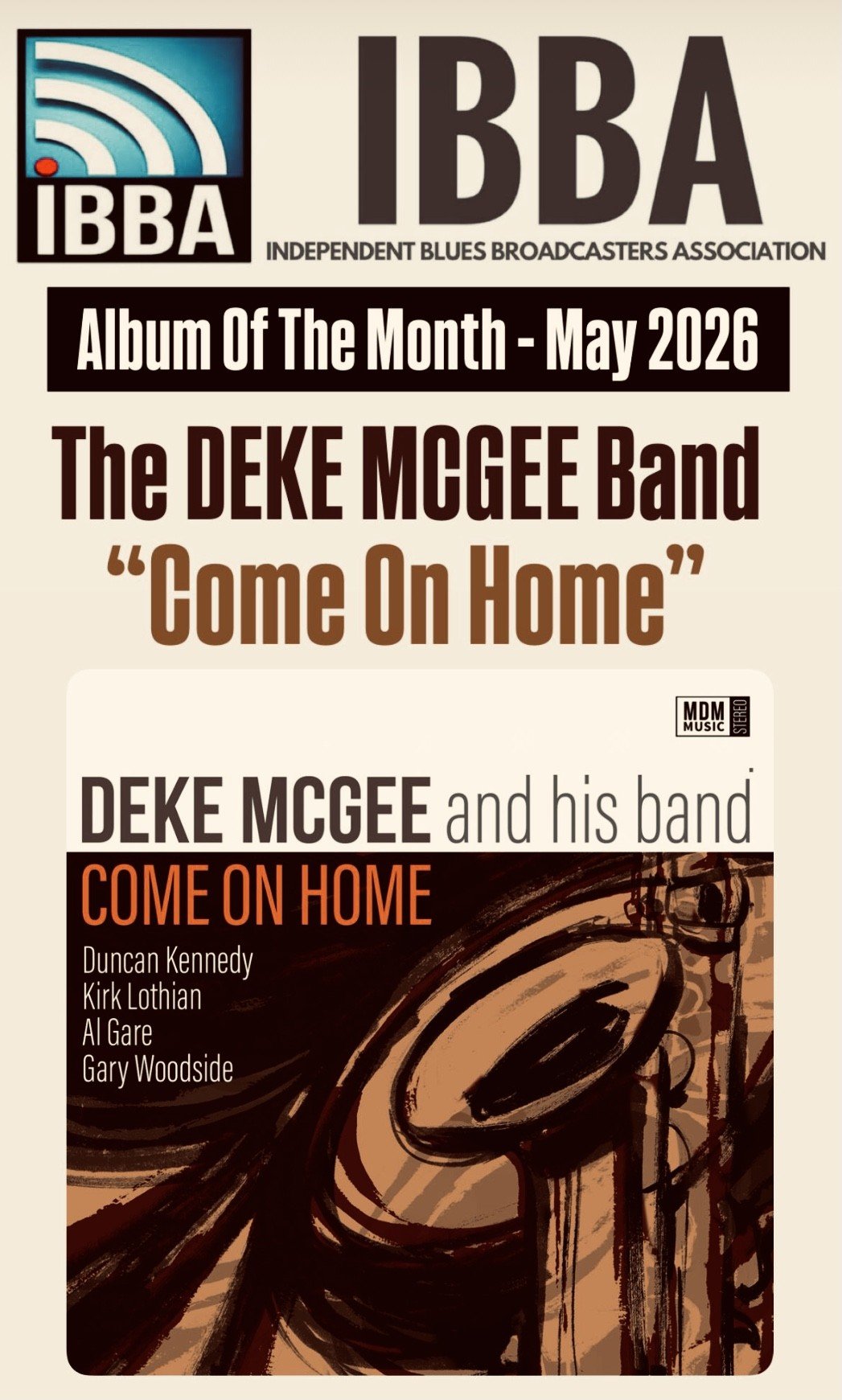


WEDNESDAY EVEN WORSE BLUES FROM THE SOUTH BLUES RADIO SHOW IBBA
Blues & Rhythm Magazine - Tony Watson - ‘ALL NIGHT LONG’ - CD Review
11-tracker from Glasgow-based sax maestro McGee, who has been a leading light on the scene there for over thirty years as well as touring all over the place backing up numerous blues and jazz artists. The CD consists of Deke’s own compositions, written in the spirit of classic r&b of the late 1940s, plus a couple of jazz-based instrumentals and slow blues. Deke’s tough blowing and pleasing vocals is accompanied by a fine little combo of guitar, keyboards, bass and drums. All fellow Glaswegians I presume. ‘Mr Cornbread’ is a fine tribute to the honking of Hal Singer, utilising the basic tenor riff before the band jumps in with a rollicking and infectious beat. ‘Blowout’ is another honking instrumental reminiscent of Big Jay at his best whilst ‘Jumpin’ Jesus Holy Cow’, ‘Jumpin’ Out The Window’ and ‘Shut Your Mouth’ are further examples of classic r&b/ jump blues. The best track for me is ‘The Sweetheart Blues’, a great New Orleans-flavoured number, which would have served Fats Domino proud. If you’re a fan of classic r&b as put out by the likes of Louis Jordan, Roy Milton and Joe Liggins etc, then Deke’s your man.
John Fordham - ’The Jive Aces Saxophonist’ - ‘ALL NIGHT LONG’ - CD Review
Before I tell you about this album let me start by saying that the band I play in, the Jive Aces get sent many CD's in the post of mostly up and coming bands looking for a support gig or maybe some advice. We usually listen to them in the van while on the road during long journeys. I confess that they don't all make it to the end of the CD! In Deke Mcgee's case we played the whole album, and more than once! I have since had the pleasure of meeting and playing with Deke and can tell you that as well as being a wonderful player he's a real gent amongst hornblowers!
Onto the album: Things kick off with a self penned Jumping tune, " Jumpin' Jesus Holy Cow" Great dance rhythm and nice rolling piano licks from Daniel Meade followed by guitar picking by Alan Brown. Deke takes it home with a Baritone solo. Deke's blowing all the Sax on this album by the way. Next up is " Mr Cornbread" , a nod to the likes of the wonderful Hal Singer who I once had the pleasure of meeting and playing with. He would certainly be tapping his foot to this one Then things slow down for a real bluesy ballad which Ray Charles might do" That's Love" At this stage I'd like to let you know that not content with just blowing Sax,Deke is singing all the songs! And what a great job he does of it too. Nice low down bluesy guitar work from Alan Brown here. Things move up just notch now to a romping tune " All Night Long" . It brings to mind the likes of the great Amos Milburn and I think Mike Sanchez would give this one a good play. Deke's voice on this also reminds me of Johnny Boyd and Indigo Swing whose tunes still get a lot of play on the Swing scene around the world. Nice raunchy blues playing from Deke. " Spooks Breakfast" is a minor blues which reminds me a little of " Why don't you do right" Here Deke blows a real mellow solo followed by some great guitar. All the way through this album the rhythm section do a great job of keeping the tunes rolling along and with energy! Now it's back to a jumping tune that will fill the dance floor in 10 seconds ! "Jumping out the window" had my head nodding good and proper. " I'm leaving town" is a romper, slightly up tempo from " All Night Long" Nice Baritone entrance into a lovely bit of tenor which reminds me of the great Maxwell Davis, who is a fave of Deke's. "Blowout" is a real belter and Deke gets a chance to stretch out on this one, with the rhythm section not letting up for a second. " The Sweetheart Blues" is a real nice New Orleans style melody which would suit the likes of Fats Domino, Smiley Lewis or even early James Brown. " Shut Your Mouth" rolls along with classic rhythm and blues feel that will once again fill the dance floor. The album ends with a nice Rhumba feel on " Monkeybird", an instrumental that the great Jack Mcvea might open or close a show with. Wow!! I'm invigorated after listening to this album!! Not only is Deke's playing superlative, but the band swing like the clappers without sparing the horses and Deke Mcgee sings and swings up a storm. Oh and by the way..He wrote ALL the songs!! Say no more!!
Carlisle Blues Rock Festival - Blues Enthused Review
Then we get a sideways step from folk blues to post-war jump blues’n’jive in the hands of the Deke McGee Band, led by the sharp-suited cool dude Mr McGee on sax and vocals. Right from the off, with the honking ‘Gravy Train’, it’s toe-tapping, hand-jiving stuff. It’s all a bit incongruous at half one in the afternoon, but with McGee’s sax playing at its core it’s a quality display of what “small big band” vintage R’n’B is all about.
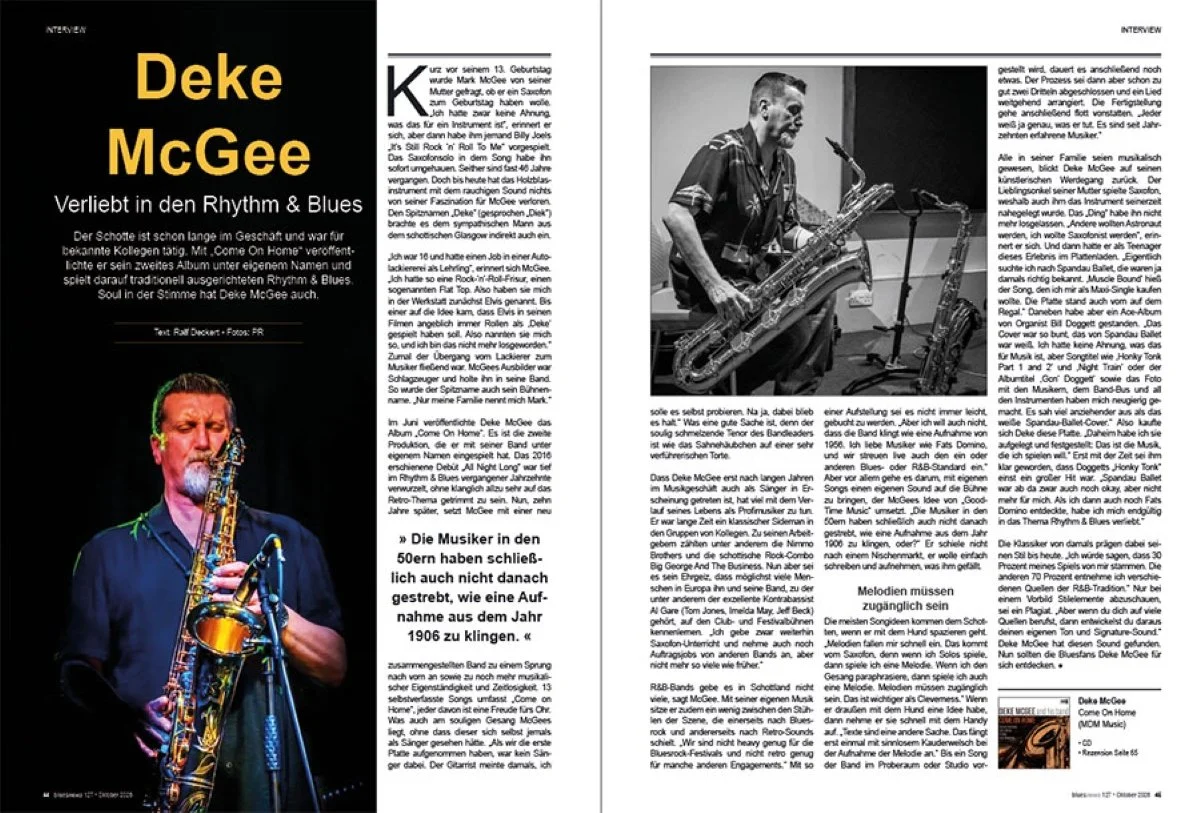
BLUES NEWS Germany - October 2026 - (Translation Below)
Deke McGee - In Love with Rhythm & Blues
The Scotsman has been in the business for a long time and has worked with a number of well-known musicians. With Come On Home, he releases his second album under his own name, playing traditionally oriented rhythm & blues. Deke McGee also has plenty of soul in his voice.
Shortly before his 13th birthday, Mark McGee was asked by his mother whether he would like a saxophone for his birthday.
“I had absolutely no idea what kind of instrument it was,” he recalls. But then somebody played him Billy Joel’s It’s Still Rock ’n’ Roll to Me. The saxophone solo in the song immediately blew him away.
Almost 46 years have passed since then, but to this day the woodwind instrument with its smoky sound has lost none of its fascination for McGee. Indirectly, it was also responsible for the likeable Glasgow musician acquiring his nickname, “Deke.”
“I was 16 and had a job as an apprentice in a car body paint shop,” McGee recalls.
“I had this rock ’n’ roll hairstyle, a so-called flat top. So at first they called me Elvis in the workshop. Then someone came up with the idea that Elvis supposedly always played characters called ‘Deke’ in his films. So they started calling me that, and I’ve never been able to get rid of it.”
The transition from car painter to musician was also fairly seamless. McGee’s paint instructor was a drummer and brought him into his band. In this way, the nickname also became his stage name. “Only my family calls me Mark.”
In June 2026, Deke McGee released the album Come On Home. It is the second record he has made with his own band under his own name. The 2016 release All Night Long was deeply rooted in the rhythm & blues of past decades, without sounding slavishly retro.
Now, ten years later, McGee has put together a new band and taken a significant step forward towards even greater musical individuality and timelessness.
Come On Home contains 13 self-assured songs, each of them a pleasure to listen to. That is partly because of McGee’s soulful singing, even though he had never regarded himself as a singer.
“When we recorded the first album, we didn’t have a singer. The guitarist said I should try doing it myself. Well, that’s how it stayed.”
And that has proved to be a very good thing, because the bandleader’s often yearning tenor is like the icing on a particularly tempting cake.
The fact that Deke McGee only emerged as a singer after many years in the music business has a great deal to do with the course of his career as a professional musician.
For a long time, he was a classic sideman in other musicians’ bands. His employers included, among others, the Nimmo Brothers and the Scottish blues rock band Big George and the Business.
His ambition now, however, is for as many people as possible throughout Europe to become familiar with him and his own band on the club and festival circuit. The group includes the excellent double bassist Al Gare, known for his work with Imelda May and Jeff Beck.
“I still teach saxophone and I still take on session work for other bands, but not nearly as much as I used to.”
McGee says there are not many R&B bands in Scotland. His own music also sits somewhat between different areas of the scene: on one side there is blues rock, and on the other there is a tendency towards retro sounds.
“We’re not heavy enough for the blues-rock festivals, and we’re not retro enough for some of the other gigs.”
With that kind of positioning, getting bookings is not always easy.
“But I don’t want the band to sound like a recording from 1966 either. I love musicians like Fats Domino, and on stage live we’ll also throw in the occasional blues or R&B standard.”
Above all, though, the aim is to bring an individual sound to the stage through original songs — a sound that reflects McGee’s idea of “good-time music.”
“The musicians in the 1950s weren’t trying to sound like a recording from 1906”
He is not aiming for a niche market. He simply wants to write and record music that he likes.
Melodies Have to Be Accessible
Most of the songwriting comes from the Scotsman himself, even though he sometimes has to scratch his head over it.
“Melodies come to me quickly. That comes from playing saxophone, because when I play solos, I’m playing a melody. When I paraphrase the vocal line, I’m also playing a melody. Melodies have to be accessible. That’s more important than cleverness.”
If he gets an idea while he is outside walking the dog, he records it quickly on his mobile phone.
“Lyrics are a different matter. At first, when I record the melody, it’s usually just meaningless gibberish.”
It then takes a little while before a song is presented to the band in the rehearsal room or studio. By that stage, however, the process is already around two-thirds complete and the song has largely been arranged.
After that, completing it happens almost by itself.
“Everyone knows exactly what they’re doing. These are musicians with decades of experience.”
Everyone in McGee’s family was musical, he explains, looking back at his childhood in Glasgow. His mother loved standards, which brought him closer to the instrument he would later make his own.
“Other kids wanted to become astronauts or footballers; I wanted to become a saxophonist.”
As a teenager, he then discovered the music of Bill Doggett.
“I was actually looking for Spandau Ballet, because they were very well known at the time. Muscle Bound was the song I wanted to buy as a 12” single.”
Beside it, however, was an Ace Records album by organist Bill Doggett.
“The cover was so colourful — I had no idea what kind of music it was, but there were song titles like Honky Tonk Part 1 and 2 and Night Train, and on the back there was a group photo showing the musicians, the band bus and all the instruments. That made me curious. It looked much more appealing than that white Spandau Ballet cover.”
So Deke bought the record.
“At home I put it on and was completely blown away. That was the music I wanted to play.”
Only later did he realise that Doggett’s Honky Tonk had once been a major instrumental rhythm n’ blues hit.
“Spandau Ballet were still cool at the time, but after that they weren’t really for me any more. And when I later discovered Fats Domino, I was completely hooked on rhythm & blues.”
The classics from that period continue to shape his style to this day.
“I’d say 30 percent of my playing comes from me. The other 70 percent I’ve taken from various sources within the R&B tradition.”
He adds that merely copying the stylistic elements of one single role model would be plagiarism.
“But when you draw from a lot of different sources, you end up developing your own tone and signature sound.”
Deke McGee has found that sound.
Now it is time for blues fans to discover Deke McGee for themselves.
Deke McGee – Come On Home - MDM Music
CD Run time: approximately 65 minutes
Blues News – Germany October 26
Review by Ralf Deckert